

In an aseptic puree processing line, customers often focus on the pulper, UHT sterilizer, and aseptic filler. CIP and SIP may look less visible, but they decide whether the line can operate reliably every day.
Fruit puree, coconut milk, juice concentrate, tomato paste, and sauces may contain viscosity, fiber, particles, fat, or sugar. Residue in pipelines, tanks, valves, heat exchangers, and filling interfaces can create hygiene and changeover problems.
CIP means cleaning in place. SIP means sterilization in place. For aseptic sections, aseptic tanks, filling pipelines, and key interfaces, these systems are part of the production design, not an accessory.
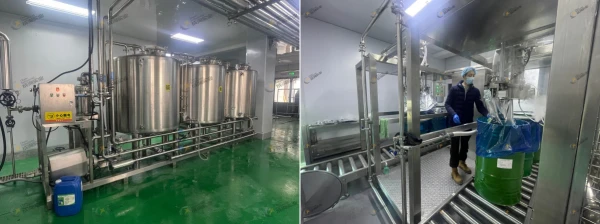
A weak cleaning design can lead to dead corners, difficult return flow, long cleaning time, frequent manual disassembly, and higher operating cost. Multi-product lines need even clearer cleaning boundaries.
Before quotation, factories should confirm product viscosity, particles or fiber, product changeover, packaging format, aseptic requirement, steam, water, power, compressed air, drainage, and cleaning management.