

An apple juice processing line should be selected by product type, raw material condition, sterilization method, filling format, and factory operation requirements.
Many factories start an apple juice processing line project by asking for the price of a washer, crusher, juicer, sterilizer, or filling machine. These prices matter, but they should not be the starting point of line design. In industrial production, apple juice processing is not a collection of separate machines. It is a connected system built around raw materials, product type, capacity, shelf-life target, packaging format, and factory operation.
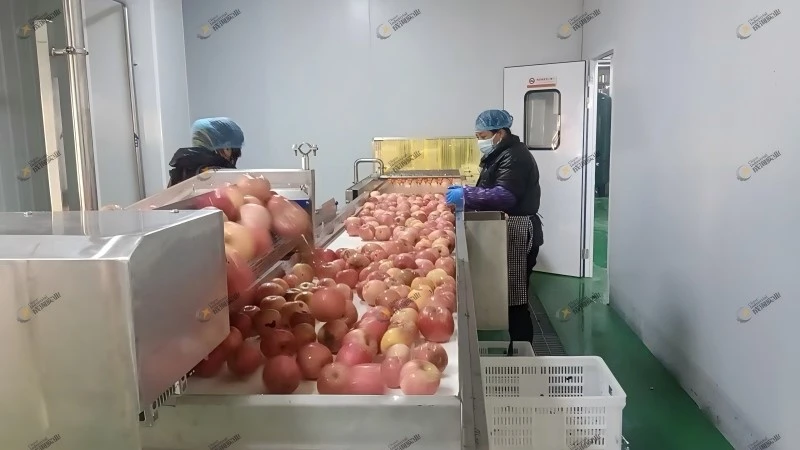
The first section to evaluate is raw material handling. Apples from different origins may vary in hardness, maturity, sugar level, impurity level, and storage condition. These factors influence washing, sorting, crushing, and juice extraction. If the pretreatment section is unstable, the problem will continue into extraction, filtration, sterilization, and filling.
The next question is the final product. A line for NFC apple juice is not the same as a line for clarified juice, apple puree, concentrate preparation, or bulk industrial juice ingredients. Each product may require different extraction efficiency, filtration level, pulp control, heat treatment, and storage design.
Sterilization and filling are usually the key decisions. For short shelf-life products, pasteurization and cold chain distribution may be suitable. For longer shelf life or bulk ingredient supply, factories often need to evaluate UHT tubular sterilization, aseptic filling, BIB, bag-in-drum, or larger aseptic bag packaging. The choice affects not only equipment cost, but also storage cost, transportation, downstream usage volume, and factory turnover.
In practice, the better sequence is to define the product first, then the capacity, then the sterilization and filling method, and finally the equipment list. The same apple raw material can lead to very different line configurations when the target product is bottled juice, fruit puree, concentrate feedstock, or bulk aseptic ingredients.

For a complete apple processing project, the line also needs process design, equipment layout, pipeline connection, CIP cleaning, manufacturing, shipment, installation, commissioning, and operator training. Most production issues are not caused by one single machine. They often come from a mismatch between upstream preparation, heat treatment, filling, and site conditions.
Before requesting a final quotation, factories should prepare the apple variety, raw material condition, target product, planned capacity, pulp or clarification requirement, sterilization method, packaging format, storage condition, plant layout, and available utility conditions. With this information, the processing line can be designed closer to real production needs.