

A UHT tubular sterilizer should be selected by product viscosity, particles, holding time, cleaning design, filling method, and line integration.
When a factory selects a UHT tubular sterilizer, the first questions are often temperature, capacity, and machine price. These points are important, but they are not enough for fruit juice, puree, coconut milk, tomato sauce, or other liquid food projects. The real decision depends on product characteristics and how the sterilizer works with the upstream and downstream process.
The first factor is the material itself. Clear juice, NFC juice, fruit puree, juice concentrate, and tomato-based products may have very different viscosity, fiber content, particles, solids, and fouling tendency. These differences affect heat transfer efficiency, pipe resistance, cleaning frequency, and long-term stability.
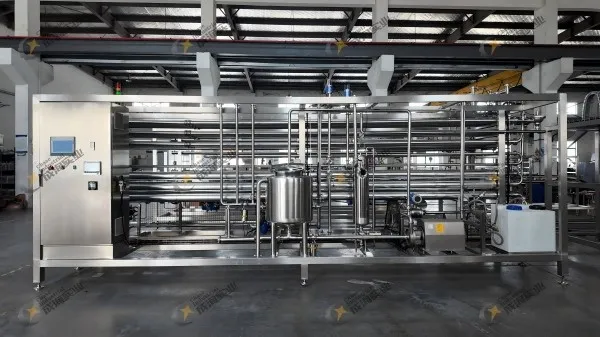
The second factor is the sterilization target. A single temperature number does not describe the whole process. Temperature, holding time, flow rate, holding tube design, valve control, and product return logic all influence actual production. For higher viscosity products, the system also needs to consider pressure drop, product residence, and cleaning access.
The third factor is the filling method. After heat treatment, the product may go to hot filling, cold filling, an aseptic tank, or aseptic filling. Packaging can be bottles, BIB, bag-in-drum, or larger aseptic bags. If sterilization and filling are not designed together, product stability may be affected even when the sterilizer itself is correctly specified.
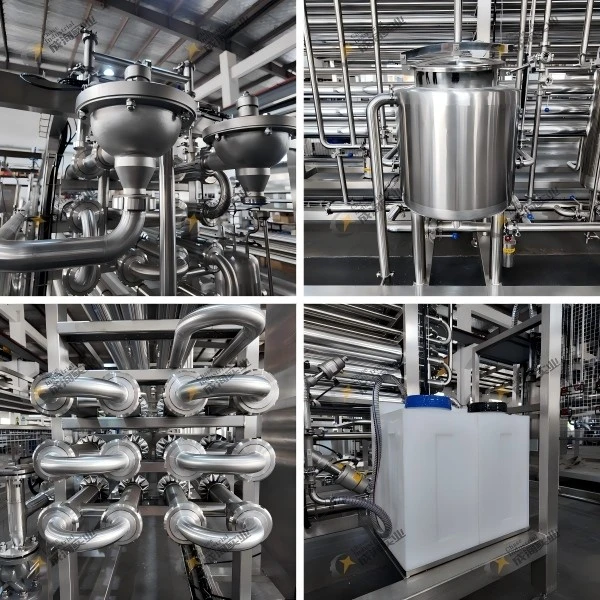
Cleaning design is another practical point. For fruit puree, concentrate, coconut milk, and tomato sauce, CIP/SIP cleaning can influence downtime and maintenance cost. Many production issues are not caused by sterilization alone. They come from poor matching between product properties, pipe layout, filling system, and cleaning design.
Before requesting a final quotation, factories should confirm product type, viscosity, fiber or particle content, target shelf life, planned capacity, packaging format, filling method, storage condition, utility condition, and plant layout. With this information, the UHT tubular sterilization system can be designed closer to real production needs.