

Choosing between pasteurization and UHT takes more than a temperature comparison. Juice pH, microbial load, viscosity, and particles matter, but so do the package, filling method, storage temperature, and sales route. The process must control the target microorganisms without giving the juice more heat than it needs. Heating, holding, diversion, and cooling therefore have to match the actual product and production flow.
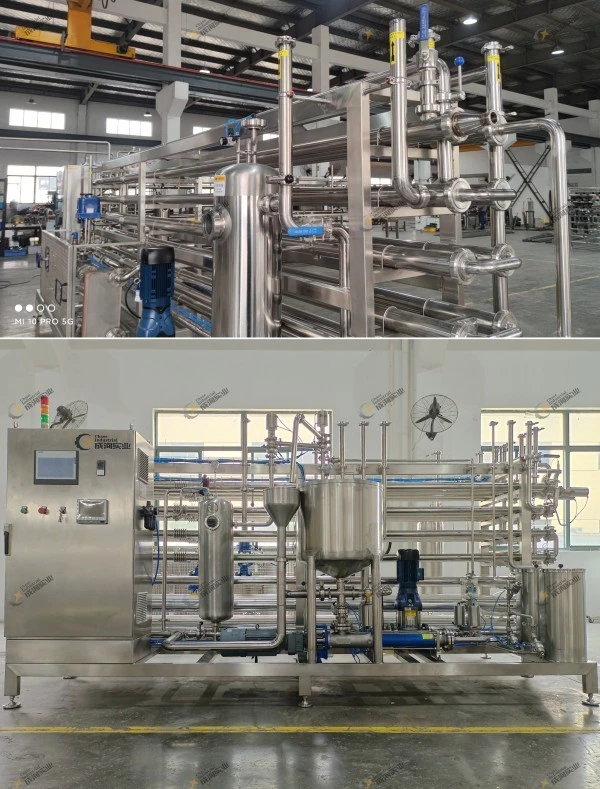
Start with product and market conditions
The equipment handles clear juice, NFC juice, pulpy beverages, and other fruit or vegetable products requiring thermal treatment. Temperature, viscosity, particle load, and incoming material can change how it runs. Nominal capacity alone does not describe production performance.
UHT does not create shelf life by itself, and pasteurization is not one fixed low-temperature recipe. Copying another product's heat schedule without checking filling, packaging, and storage can leave the line underprocessed or add unnecessary heat damage. Compare product quality, stable run time, product loss, and cleaning frequency.
Thermal treatment and filling form one preservation route
Pasteurized juice usually moves into cooling and chilled distribution, or into a shorter sales cycle. UHT needs aseptic buffering and aseptic filling after the heater. The package, valves, and CIP/SIP boundary must support that route. Sending UHT product into an ordinary tank or filling line breaks the aseptic chain. Connections, controls, and sanitation must follow the same production sequence.
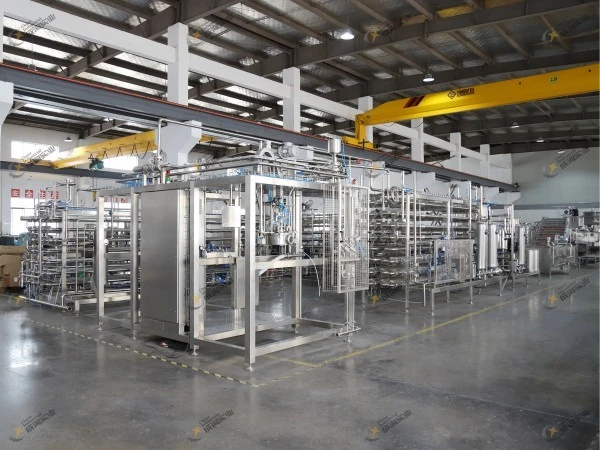
Production records must include diversion and cooling
Check the product for particles and fouling behavior, then look at package tolerance and filling hygiene. Warehouse conditions, transport temperature, and the real sales cycle must fit the same route. Tie each observation to the batch, equipment settings, and cleaning state before changing the process.
For clear juice, NFC juice, pulpy beverages, and other fruit or vegetable products requiring thermal treatment, keep a separate operating record for each product and package. Include the inlet condition, main settings, downstream status, and cleaning state.
Run clear juice, NFC juice, pulpy beverages, and other fruit or vegetable products requiring thermal treatment long enough to observe stable production, a normal stop, restart, and recovery after cleaning. The first few minutes rarely show the full restriction.
Start with the package, sales route, and storage conditions. Then set the microbial objective and filling method. Product viscosity, particles, heat transfer, and fouling determine how holding, diversion, cooling, and cleaning should work. These conditions determine equipment size, interfaces, and operating sequence.
Check the complete heat and filling route
During a trial, run the product through heating, holding, diversion, cooling, and filling. Keep the packed samples under the planned storage conditions and follow how they change.
With clear juice, NFC juice, pulpy beverages, and other fruit or vegetable products requiring thermal treatment, compare start-up, stable running, stopping, and restart. Use the record to adjust feed, level, pressure, and cleaning timing, then repeat the check after maintenance or product changeover.
The final layout for clear juice, NFC juice, pulpy beverages, and other fruit or vegetable products requiring thermal treatment must also define short stops, recirculation, cleaning, connected equipment, and factory utilities.