

A pineapple project should not start with a fixed machine list. Before selecting a peeler, crusher, pulper, juice extractor, sterilizer, or filler, the buyer needs to define the final product. A pineapple processing line for juice is not the same as a line for puree, dices, fruit particles, or bulk food ingredients.
Pineapple creates several practical decisions in the front section. The peel, eyes, core, fiber, maturity, and incoming rhythm affect how the fruit should be washed, sorted, peeled, cored, crushed, pressed, or pulped. If the front section cannot feed the next step steadily, the sterilization and filling section will also become unstable.
For pineapple juice, the discussion usually focuses on crushing, extraction, filtration, deaeration, sterilization, and filling. For pineapple puree, the supplier needs to pay more attention to pulping, refining, fiber control, viscosity, pumping, and pipe cleaning. For diced pineapple or fruit particle products, cutting quality, holding, product damage, and package format become more important.
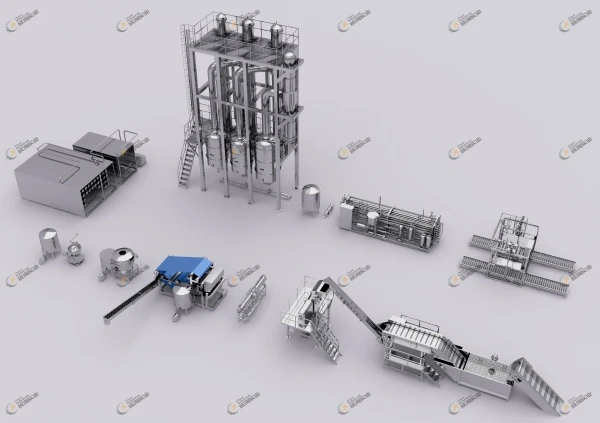
Packaging should be discussed early. Retail packs, pouches, BIB, 200 L bag-in-drum, or other bulk packaging create different requirements for holding tanks, sterilization, filling interfaces, storage, and customer use. A package that looks like a sales detail can change the process design.
Cleaning and product changeover also need attention. Pineapple has sugar and fiber, so residue around screens, pumps, valves, and pipelines needs consideration during layout and equipment selection. If the factory wants to use the same line for mango, passion fruit, tomato, or other tropical fruit products, the review needs to cover viscosity, particles, flavor carryover, sterilization conditions, and CIP/SIP coverage.
Site conditions should not be left until installation. Plant height, drainage, steam, cooling water, compressed air, equipment access, and operator space can affect the position of peeling and coring equipment, tanks, sterilization systems, fillers, and cleaning routes.
Peel, eyes, core, spent pulp, and cleaning water also need clear handling routes. Their collection points affect drainage, operator movement, sanitation zoning, and the space around the front-processing equipment. This part is easy to miss when the first layout focuses only on product flow.
Incoming fruit inspection is another practical control point. Size, maturity, damaged fruit, and the amount of manual trimming can change labor demand and feeding stability before the mechanical section begins.
Buyers often ask whether one pineapple line can make several products. That depends on how different those products are. Juice, puree, and dices may share part of the front section, but the downstream route can change after crushing or preparation. A practical design should identify which sections are shared, which sections need change parts, and which sections should remain separate.
Another common question is whether the quotation can be prepared without a plant drawing. A rough discussion is possible, but a reliable process proposal needs site information. Drainage, residue handling, operator access, tank position, and filling room arrangement can change the line layout. If the factory is upgrading an existing plant, photos and old layout drawings are useful even when they are not final.
Capacity, utility demand, package speed, cleaning time, and product loss remain conditional until the raw material, target product, package, and operating pattern are confirmed. These conditions protect the factory from relying on figures that do not match the actual project.
Fresh pineapple juice, pineapple puree, diced pineapple, and a flexible tropical fruit line have different process boundaries. Naming the product form early makes it easier to confirm equipment relationships, packaging choices, and the information needed for quotation.
Fixed yield, shelf life, temperature, or capacity figures require project data and an agreed acceptance method. Raw material tests, package confirmation, utility checks, and layout review provide a more reliable basis for these decisions.
A useful proposal for pineapple processing is therefore based on raw material condition, target product, package, storage method, expected operating rhythm, product changeover plan, and utility conditions. Without these inputs, the proposal is only a rough equipment list.
Shanghai Chase can discuss pineapple processing projects from process route to equipment connection and installation boundary. The goal is to help buyers prepare better inquiry information, not to promise fixed capacity, price, delivery time, or performance without project data.
This keeps the conversation technical, specific, and easier to qualify.
Before asking for a detailed proposal for a pineapple processing line, buyers should prepare raw material information, product type, package format, plant drawings if available, utility conditions, and whether the line needs to handle other fruit products.